Teacher Efficiency Bar Exam (EB Exam) 01: Module 02 Questions & Answers
Teacher Efficiency Bar Exam 01 | Module 02: Short Questions and Answers
Passing the Teacher Efficiency Bar (EB) Examination is a vital milestone for educators in the Sri Lanka Teacher Service to secure grade promotions and career advancement. Among the subjects tested, Exam 01 - Module 02 (Educational Psychology and the Teaching-Learning Process) carries high weightage and provides a great opportunity to score maximum marks.
To help you manage your busy schedule while teaching, we have compiled a focused set of high-yield short questions and answers covering key theoretical concepts frequently tested in Module 02.
Key Short Questions & Answers (Module 02 Focus)
Question 01: What are the three primary laws of learning in Edward Thorndike’s "Trial and Error Learning" theory?
Answer:
- Law of Readiness: The principle that learning is most effective when a student is physically and mentally prepared to learn.
- Law of Exercise: The principle that repeating a stimulus-response connection strengthens the learning habit through practice.
- Law of Effect: The principle that behaviors followed by pleasant or satisfying outcomes are more likely to be repeated and reinforced.
Question 02: What is the main difference between "Positive Reinforcement" and "Negative Reinforcement" in classroom management?
Answer:
- Positive Reinforcement: Encourages desirable behavior by presenting a rewarding stimulus (e.g., praise, stars, or tangible rewards) after the behavior occurs.
- Negative Reinforcement: Encourages desirable behavior by removing an unpleasant or undesired condition (e.g., stopping nagging or removing a restriction) once the behavior occurs.
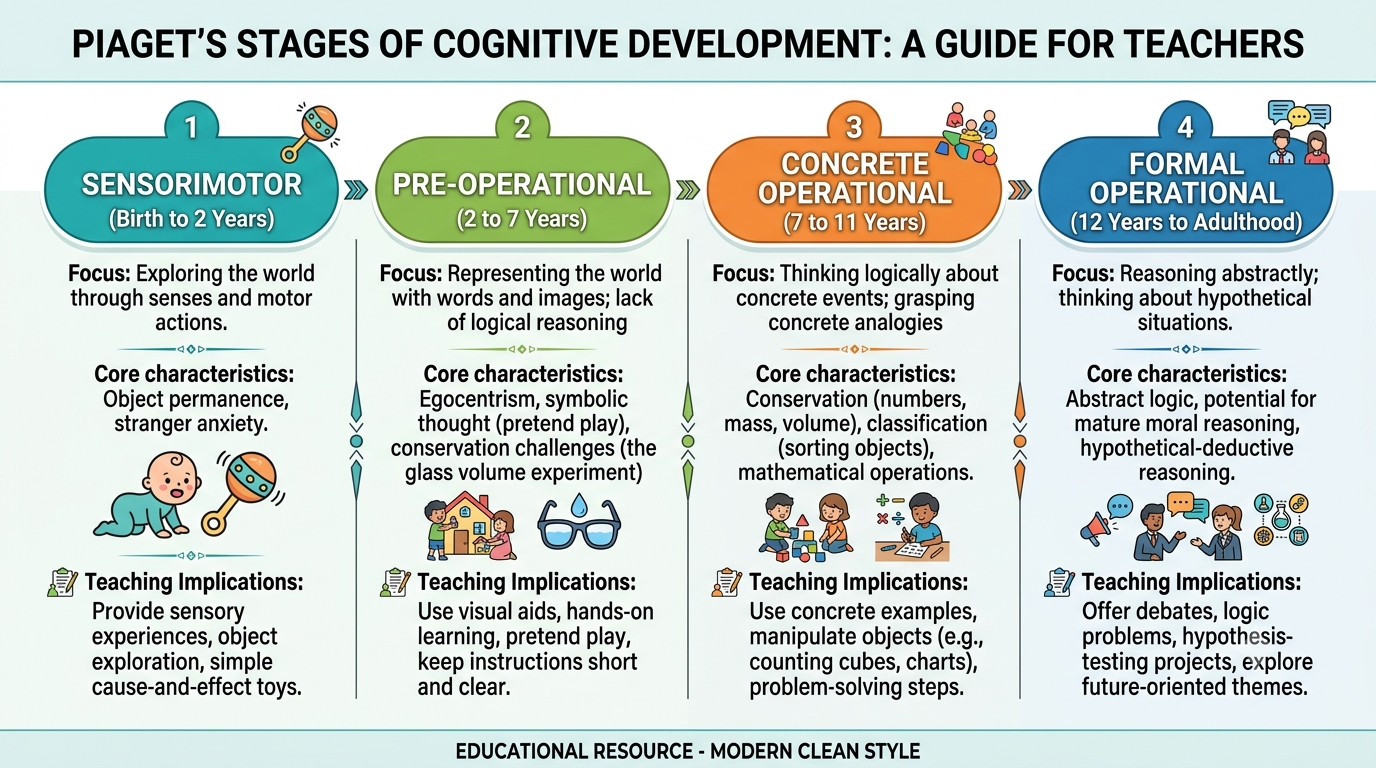
Question 03: Name the four stages of cognitive development according to Jean Piaget.
Answer:
- Sensorimotor Stage: (Ages 0 – 2 years)
- Pre-operational Stage: (Ages 2 – 7 years)
- Concrete Operational Stage: (Ages 7 – 11 years)
- Formal Operational Stage: (Ages 11+ years)
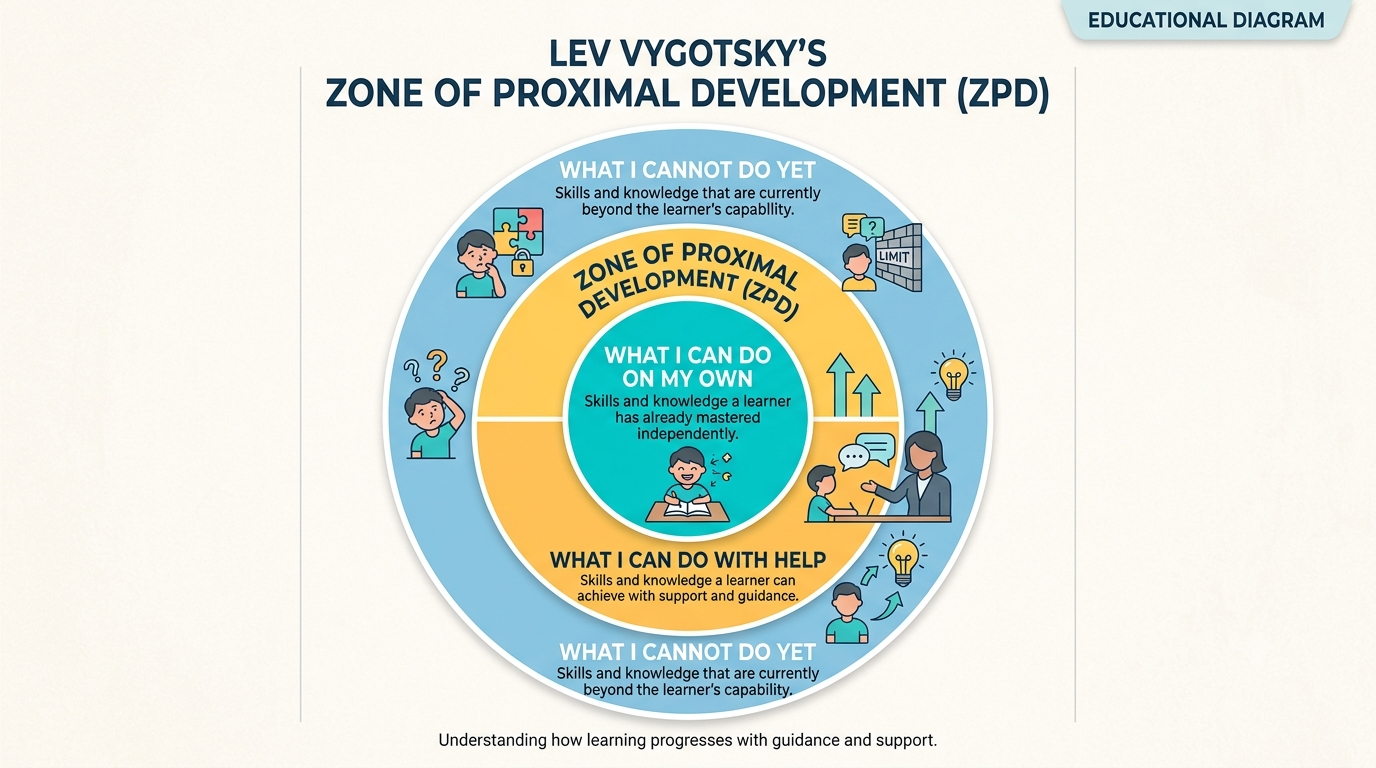
Question 04: What is the "Zone of Proximal Development" (ZPD), and who proposed this theory?
Answer:
Proposed by Lev Vygotsky, the Zone of Proximal Development (ZPD) refers to the distance between what a learner can do independently and what they can achieve with guidance and encouragement from a More Knowledgeable Other (MKO), such as a teacher or peer.

Question 05: How do "Formative Assessment" and "Summative Assessment" differ in the teaching-learning process?
Answer:
- Formative Assessment: Continuous assessment conducted during the learning process to identify learning gaps and adjust instruction (Assessment FOR Learning).
- Summative Assessment: Evaluative testing conducted at the end of an instructional unit or term to measure overall achievement and assign grades (Assessment OF Learning).
Essential Study Tips to Score Higher in Module 02
- Link Theories to Classroom Scenarios: EB exam questions often go beyond simple definitions. Be prepared to explain how theories (like Vygotsky’s Scaffolding or Operant Conditioning) apply to actual classroom challenges.
- Maintain Mind Maps for Theorists: Create quick reference sheets comparing key psychologists (Piaget, Vygotsky, Thorndike, Skinner, Bruner) and their core contributions.
- Practice Past Papers: Regularly solving previous Sri Lanka Teacher Service EB papers helps you get comfortable with time management and recurring question styles.
Share with Fellow Teachers!
👉 If you found this article helpful, leave a Like and share your thoughts in the Comments section below!
🎯 Tag your colleagues who are appearing for the EB Exam this year. Let’s prepare together and clear it successfully!


Comments
Post a Comment